
By Abigail I. Ijai
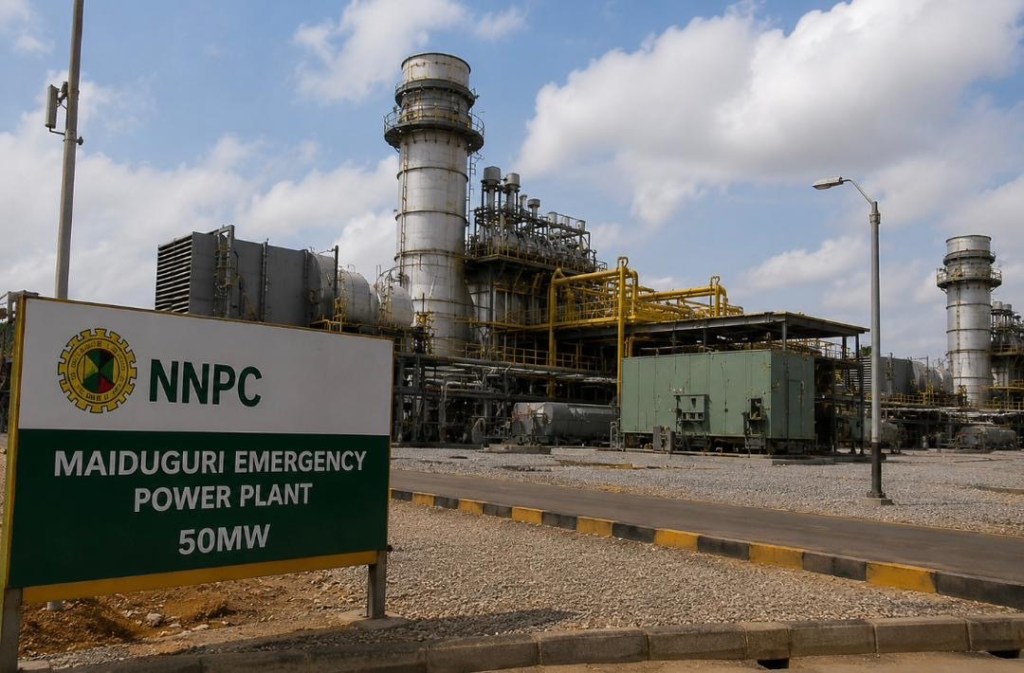
Federal government support for the Emergency Power Plant has raised hopes for stable electricity from 2026 to 2028, aimed at boosting businesses, households, and economic activities across Maiduguri, Borno State.
Electricity has long been one of the biggest challenges affecting daily life and business activities in Maiduguri. From small shops to markets and service providers, power supply has remained unstable, forcing many businesses to depend heavily on generators, which increases operating costs.
Recently, federal government intervention through the Maiduguri Emergency Power Plant (MEPP) has brought renewed attention to the city’s electricity situation. According to reports published by Punch on their website, and other national media outlets, the government approved a multi-year funding support package estimated at over ₦68 billion to sustain operations of the power facility from 2026 to 2028.
The aim of the intervention, as reported, is to improve electricity generation and distribution within Maiduguri and its surrounding areas, with expectations that stable power supply will support both households and economic activities.
The electricity problems in Maiduguri did not develop overnight. One major cause has been the long-standing damage to national grid infrastructure in the northeast region, largely affecting transmission and distribution systems.
In addition, inconsistent power generation capacity over the years has made it difficult to meet growing demand from residents and businesses. As the population increases, demand for electricity continues to rise faster than supply.
Another contributing factor is the heavy reliance on centralized power systems, which become unstable when transmission lines are damaged or overloaded.
The impact of unstable electricity supply is strongly felt in the business sector. Many small and medium-scale businesses in Maiduguri operate with generators, which significantly increases their cost of production.
For traders in major markets, refrigeration of goods becomes expensive. Barbers, phone charging services, welders, tailors, and other small service providers also face higher running costs due to fuel consumption.
These extra costs are often transferred to customers, leading to higher prices of goods and services in the market. Over time, this affects purchasing power and slows down business growth.
Households are not left out either. Many residents experience interruptions in electricity supply, which affects domestic activities such as cooking, lighting, and device usage.
The Emergency Power Plant intervention is expected to reduce dependence on generators and stabilize electricity supply in the city if fully implemented as planned.
With improved power supply, businesses are expected to reduce operational costs, especially in areas like fuel spending and equipment maintenance. This could potentially lead to more stable pricing for goods and services.
For small business owners, stable electricity may also improve productivity, allowing longer working hours and better service delivery.
Energy experts and development observers often emphasize that sustained electricity stability requires more than funding alone. Proper maintenance, transparent management of power infrastructure, and continuous investment in distribution networks are essential.
There is also a growing call for diversification of energy sources, including renewable energy solutions such as solar power, especially for businesses and communities in semi-urban areas.
Electricity remains a key driver of business survival and economic growth in Maiduguri. While the federal intervention through the Emergency Power Plant has raised expectations, its long-term success will depend on effective implementation and sustained management.
If effectively managed, the Maiduguri power intervention could serve as a major turning point for the city’s economic development. For now, businesses and households continue to hope that stable electricity will move from promise to reality, reshaping the economic landscape of the city.


 Nova Pulse Times
Leave a comment