
By Praise Adegoriola
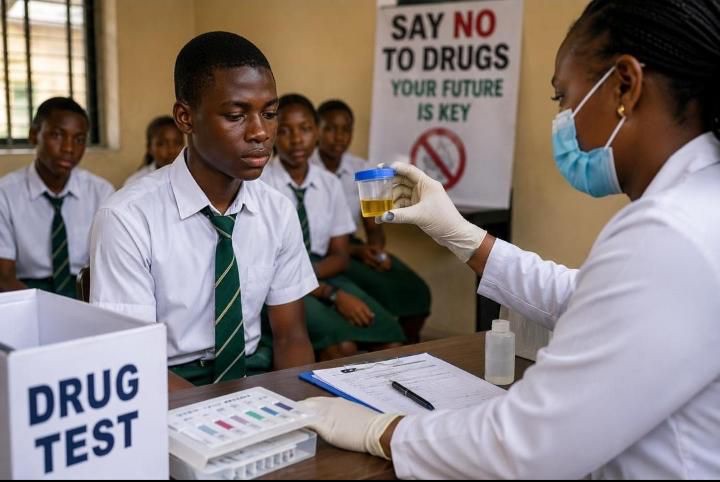
The Federal Government has introduced compulsory drug testing for secondary school students as part of new measures aimed at reducing substance abuse among young people in Nigeria.
According to a report by the Punch Newspaper, the new policy will require all newly admitted secondary school students to undergo mandatory drug integrity tests at the point of entry. Schools are also expected to conduct periodic and random drug tests for both new and returning students during academic sessions.
The policy is contained in the National Implementation Guidelines Against Drug and Substance Use in Schools in Nigeria, recently introduced by the Federal Government in collaboration with the National Drug Law Enforcement Agency and the Federal Ministry of Education.
Under the guidelines, students who test positive for drugs will first undergo counselling and treatment supervised by school authorities and health professionals. Those who repeatedly test positive after treatment and rehabilitation may face temporary suspension from school until they are considered stable enough to return.
The government said the policy is aimed at creating safer learning environments and addressing the growing rate of substance abuse among teenagers and students across the country. Authorities also plan to strengthen drug education within the school curriculum as part of broader prevention efforts.
Officials of the National Drug Law Enforcement Agency have expressed concern over the increasing cases of drug abuse involving young Nigerians, warning that the trend could negatively affect students’ academic performance, mental health, discipline, and future productivity.
While supporters of the policy believe it could help reduce drug use among students, some critics have raised concerns about privacy, possible stigmatisation, and the readiness of schools and health facilities to effectively implement the programme nationwide.
Critics have also argued that the success of the policy will depend largely on proper monitoring, counselling support, and cooperation among schools, parents, and health authorities.
The development has continued to generate mixed reactions among parents, teachers, and education stakeholders across the country, as discussions grow over the balance between student welfare, discipline, and public health.


 Nova Pulse Times
Leave a comment