
By Abigail I. Ijai
The ongoing conflict in Sudan continues to raise global concern in 2026 as violent clashes between rival military groups intensify, threatening not only the country’s stability but also peace across Northeast Africa.
At the center of the crisis is a power struggle between the Sudanese Armed Forces and the Rapid Support Forces, both fighting for control of the country’s political future. What started as a disagreement over governance has now turned into a prolonged conflict, with serious consequences for civilians.
Recent reports in April 2026 confirm that the war in Sudan is still ongoing. As reported on the Al Jazeera News website, Sudan’s conflict has continued for years, with the army and the Rapid Support Forces still locked in fighting in several parts of the country. The report highlights that despite repeated attempts at peace talks, no lasting agreement has been reached, and civilians remain exposed to insecurity and displacement. Civilians remain at risk as insecurity continues, while humanitarian organisations warn that access to food, healthcare, and shelter is still a major challenge.
The roots of the crisis can be traced to years of political instability following Sudan’s failed transition to civilian rule. Analysts explain that the inability to bring different armed groups under one unified system created tensions that later led to violence. Issues of power, control, and mistrust continue to drive the conflict, making peaceful resolution difficult.
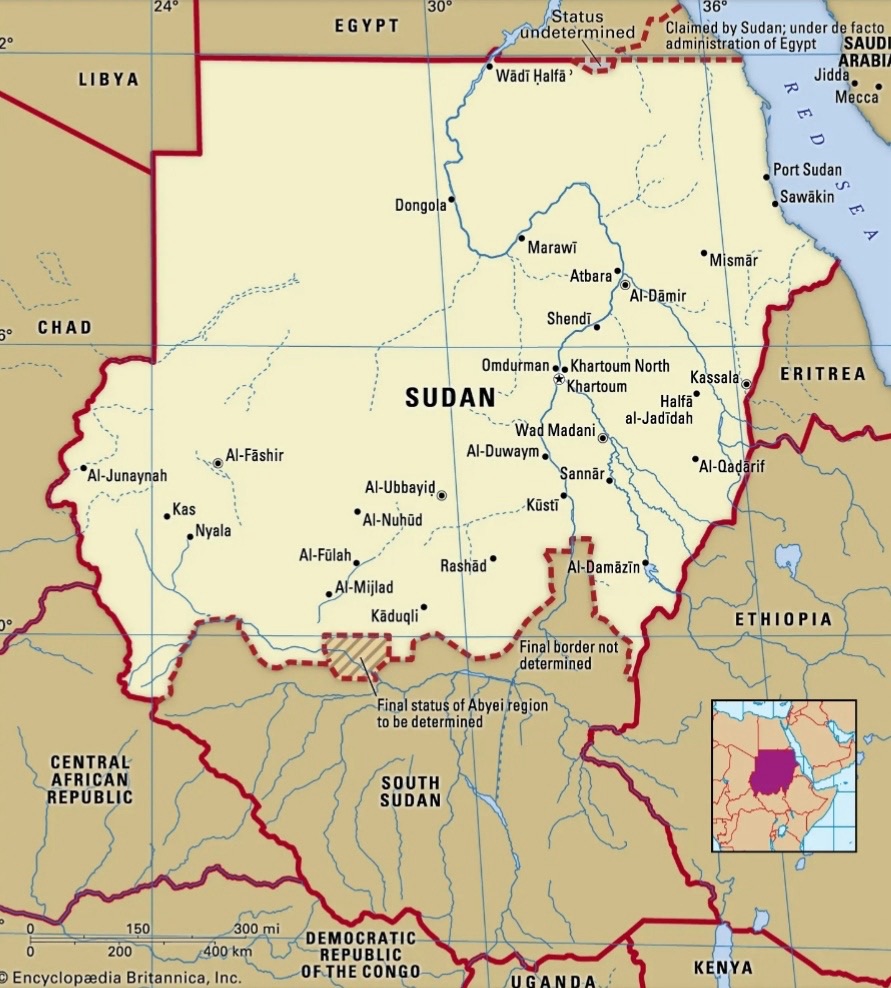
The humanitarian situation has worsened, especially in cities like Khartoum, where daily life has been severely affected. Access to food, healthcare, and basic services has dropped sharply. According to a report published on the United Nations News website (UN News), millions of people have been displaced, with many forced to flee to neighboring countries under dangerous conditions. Families have been separated, schools have closed, and economic activities have slowed down.
Beyond Sudan, the crisis is affecting nearby countries. Many are facing pressure from refugee inflows, while trade activities have also been disrupted. The African Union has continued to call for African-led solutions, stressing the importance of dialogue and cooperation.
Efforts to restore peace have not been successful so far. Several ceasefire agreements have been announced, but many have failed shortly after implementation. One major problem is the lack of trust between the two sides, as each fears losing power. Without strong enforcement, these agreements remain weak.
Experts say that solving the crisis will require more than temporary ceasefires. It will need inclusive dialogue involving not just military leaders but also civilians. Strong international support is also important to ensure that agreements are respected. At the same time, urgent humanitarian aid must reach affected communities.
The conflict in Sudan reflects deeper political and structural problems. Without serious cooperation at both national and international levels, the crisis may continue, with long-term effects on peace and development in the region. The future remains uncertain, but the need for a lasting solution is urgent.


 Nova Pulse Times
Leave a reply to Muhammad zanna Cancel reply