
By Abigail I. Ijai
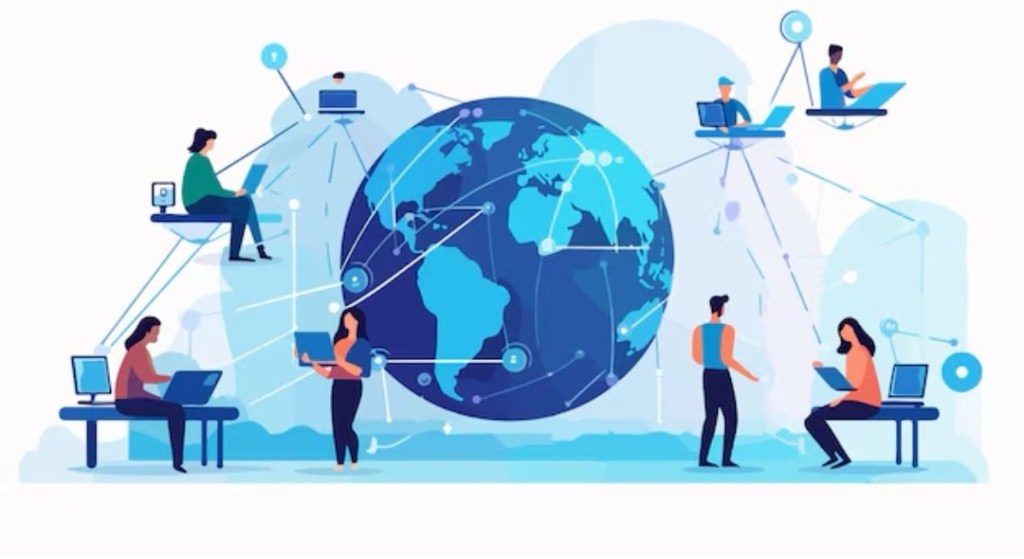
Foreign technology companies like Google, Meta, Microsoft, and Amazon are expanding their influence across the world. These companies, mostly based in the United States, are now deeply involved in developing countries such as Nigeria, India, Kenya, and Brazil. This is raising concerns about who controls data and how much power these companies now have in the digital space.
In recent years, Big Tech companies have moved beyond developed countries into Africa, Asia, and Latin America. Their platforms are now used for communication, business, education, and even government services in many developing nations. This shows how important they have become in everyday life.
As reported by Reuters News Agency, Microsoft announced plans to invest about $50 billion in artificial intelligence and digital infrastructure across developing regions known as the “Global South.” The company said the investment is aimed at expanding technology access in these regions, while also strengthening its global digital presence.
Experts say this growth is happening because many developing countries do not yet have strong local technology industries. As a result, platforms owned by Big Tech companies become the main tools for online activities. Over time, this creates digital dependence, where countries rely heavily on foreign systems for communication, business, and information.
However, the situation is not only negative. Big Tech companies have also improved access to information and created new economic opportunities. Small businesses in countries like Nigeria and Kenya now use social media platforms to reach customers, while students and workers use online tools to learn and earn income.
The Guardian reports that the expansion of large technology companies is raising concerns about control over digital infrastructure, including the growing number of data centers owned foreign companies in different part of the world.
Another major issue is data control. Data is now one of the most important resources in the world and is often described as the “new oil.” This means that companies that control data also have strong influence over digital activities, advertising, and the flow of information.
Despite the benefits, experts warn that this growing influence may lead to challenges such as loss of privacy, weak local innovation, and long-term economic dependence on foreign platforms. Some analysts describe this situation as digital colonization, meaning the gradual control of digital systems by powerful external companies.
Big Tech companies are helping to connect the world, but their growing influence also raises serious questions about control and independence in the digital space. Without stronger local development and proper regulation, many developing countries may continue to depend heavily on systems they do not fully control.


 Nova Pulse Times
Leave a reply to Tanam Micah Cancel reply